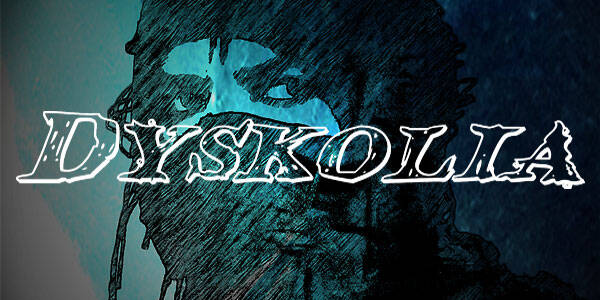
Dyskolia – Dort, wo die Nacht ihr Herz zeigt
Es gibt Alben, bei denen man nach dem ersten Durchlauf sofort über Produktion, Sound oder einzelne Songs sprechen möchte.
Und dann gibt es Veröffentlichungen, bei denen man nach dem letzten Ton erst einmal still wird.
Dyskolia gehört für mich genau in diese zweite Kategorie.
Vielleicht liegt es daran, dass man beim Hören sehr schnell merkt: Hier möchte mir niemand einfach nur Musik präsentieren. Hier möchte mir jemand etwas von sich zeigen.
Etwas, das nicht unbedingt leicht auszusprechen ist. Etwas, das wehgetan hat.
Etwas, das verarbeitet werden musste.
Als ich mich mit Louis Cyphre über Dyskolia unterhalten habe, wurde mir noch einmal bewusster, wie persönlich dieses Projekt tatsächlich ist. Hinter diesem Namen steckt nicht einfach ein neues musikalisches Experiment. Dahinter steckt ein Mensch, der seine Gedanken, seine Trauer, seine Erinnerungen und seine inneren Dämonen in Musik verwandelt hat.
Und vielleicht ist genau das der Grund, weshalb diese Veröffentlichung eine solche Nähe entwickelt. Man hört nicht nur Musik.
Man kommt einem Menschen ein kleines Stück näher.
Ein Projekt, das eigentlich gar keines werden sollte
Was mich an der Geschichte von Dyskolia besonders fasziniert, ist, dass am Anfang gar nicht die Idee eines neuen Projekts stand.
Nach dem La-Magra-Release „In the Dead of Night“ fühlte sich Louis ausgebrannt. Die Corona-Zeit war weitgehend vorbei, doch innerlich war offenbar noch vieles nicht abgeschlossen. Also begann er zu schreiben. Gedanken wurden zu Texten.
Nicht mit dem Ziel, irgendwann ein Album daraus zu machen. Nicht für andere.
Zunächst nur für sich selbst.
Ich finde, genau darin liegt bereits etwas sehr Berührendes.
Denn manchmal schreiben wir Dinge auf, weil wir sie niemandem sagen können.
Und manchmal werden aus diesen Worten irgendwann Songs.
Durch einen Remix für Acylum entstand schließlich eine Atmosphäre, die sich keinem seiner bisherigen Projekte zuordnen ließ. Aus diesem Gefühl heraus entstand Dyskolia.
So wurde aus etwas sehr Persönlichem ein musikalisches Zuhause.
Die Dunkelheit bekommt eine Stimme.
Dyskolia bewegt sich musikalisch in einer dunklen Welt aus industrieller Elektronik, melancholischen Flächen und schweren, teilweise bedrückenden Klanglandschaften.
Aber diese Dunkelheit ist niemals Selbstzweck.
Sie erzählt.
Sie trägt Erinnerungen.
Sie trägt Trauer.
Und sie trägt die Frage in sich, was passiert, wenn man sich irgendwann zu sehr in seinen eigenen Gedanken und Dämonen verliert.
Louis beantwortet diese Frage nicht mit einer einfachen Botschaft.
Er lässt sie stehen.
Und vielleicht ist genau das richtig.
Denn manche Dinge im Leben lassen sich nicht in einem Satz erklären.
Man muss sie fühlen.
Louis Cyphre zeigt eine andere Seite.
Wer Louis bereits aus La Magra kennt, wird hier eine andere Facette entdecken.
Nicht unbedingt einen völlig anderen Musiker – aber einen wesentlich offeneren Menschen.
Im Gespräch erzählt er, dass seine Stimme heute reifer und emotionaler geworden ist. Früher sei sie kalt und verzerrt gewesen. Bei Dyskolia stimmt er seinen Gesang bewusst auf jedes einzelne Stück ab. Und diese Veränderung ist spürbar.
Die Stimme steht nicht über der Musik. Sie verschmilzt mit ihr.
Manchmal klingt sie kraftvoll, manchmal verletzlich, manchmal beinahe so, als würde jedes Wort ein wenig Überwindung kosten.
Gerade diese Momente bleiben hängen.
Denn wenn ein Sänger nicht nur Worte singt, sondern etwas von sich selbst hineinlegt, verändert sich die Wirkung eines Songs vollkommen.
Kein Schutzpanzer mehr
Einer der persönlichsten Momente unseres Interviews ist für mich Louis' Aussage, dass er bei Dyskolia seinen kompletten „Panzer“ abgelegt hat.
Das ist ein Satz, der nachhallt.
Denn wir alle tragen solche Panzer.
Manche sichtbar, manche unsichtbar.
Wir entscheiden selbst, was andere von uns sehen dürfen und was besser verborgen bleibt.
Mit Dyskolia öffnet Louis diese Tür.
Und natürlich macht ihn das verletzlich.
Er sagt selbst, dass dieses gesamte Projekt für ihn ein großes Wagnis ist.
Ich glaube, genau deshalb fühlt sich die Musik so unmittelbar an.
Sie versucht nicht, unangreifbar zu sein.
Sie ist es bewusst nicht.
Musik mit dem Herzen
Louis beschreibt seine Arbeitsweise mit einem Satz, den ich sehr passend finde:
Er habe die Songs mit dem Herzen und nicht mit dem Verstand produziert.
Vielleicht ist das die wichtigste Erklärung für die Wirkung von Dyskolia.
Denn hier geht es nicht darum, einen möglichst sicheren musikalischen Weg zu gehen.
Louis hat seine selbst gesetzten Grenzen bewusst eingerissen.
Er wollte nicht immer wieder denselben Weg gehen. Er wollte Abwege ausprobieren.
Und genau diese Bereitschaft spürt man.
Dyskolia klingt nicht so, als wäre jeder Schritt vorher ausgerechnet worden.
Es klingt vielmehr nach einem Künstler, der seinem Gefühl vertraut.
Und manchmal entstehen genau daraus die ehrlichsten Veröffentlichungen.
Ein Album, das Nähe zulässt
Was ich an Dyskolia besonders schätze, ist, dass die Songs zwar sehr persönlich sind, aber trotzdem nicht das Gefühl vermitteln, dass man als Hörer ausgeschlossen bleibt.
Im Gegenteil. Man bekommt die Möglichkeit, eigene Erinnerungen hineinzulegen. Eigene Ängste. Eigene Verluste.
Eigene Nächte, in denen die Gedanken einfach nicht aufhören wollen.
Louis sagt, dass seine Texte bewusst sehr direkt geschrieben sind und kaum Raum für Interpretation lassen.
Und trotzdem wird jeder Hörer etwas anderes fühlen.
Denn Gefühle funktionieren nicht nach Gebrauchsanweisung.
Ein Wort kann bei einem Menschen eine völlig andere Erinnerung auslösen als bei einem anderen.
Genau darin liegt die Kraft von Musik. Vielleicht ist Dunkelheit nicht das Ende
Trotz all der Schwere ist Dyskolia für mich kein hoffnungsloses Album. Und das finde ich wichtig.
Denn zwischen Trauer, Verlust und Dunkelheit bleibt immer etwas zurück. Ein kleiner Funken.
Louis selbst nennt ehrliche Gefühle, Trauer und einen Funken Hoffnung als das, was er sich zwischen den Songs wünscht.
Und genau diesen Funken habe ich beim Hören ebenfalls empfunden. Nicht als lautes „Alles wird gut“.
Sondern viel leiser. Eher als das Gefühl:
Du darfst durch diese Dunkelheit gehen. Aber du musst nicht für immer darin bleiben.
Mein persönliches Fazit
Dyskolia ist für mich keine Veröffentlichung, die man einfach mit ein paar Genrebezeichnungen beschreiben kann.
Industrielle Elektronik? Ja. Dunkel. Melancholisch. Schwer.
Aber all diese Begriffe erzählen nur einen Teil der Geschichte.
Der wichtigste Teil ist der Mensch dahinter.
Louis Cyphre hat mit Dyskolia etwas gewagt, das wesentlich schwieriger ist, als einen neuen Sound auszuprobieren:
Er hat sich selbst gezeigt. Ohne Panzer. Ohne Ausreden.
Ohne den Versuch, seine Gefühle angenehmer zu machen, als sie tatsächlich sind.
Und genau deshalb berührt mich dieses Album. Nicht, weil es dunkel ist.
Sondern weil diese Dunkelheit ehrlich ist.
Vielleicht wird nicht jeder Hörer jede Geschichte verstehen. Vielleicht wird nicht jeder dieselben Gefühle darin finden.
Aber ich glaube, genau das ist vollkommen in Ordnung. Denn am Ende bleibt Musik immer auch ein Stück von uns selbst.
Und wenn Dyskolia etwas schenken kann, dann vielleicht dieses Gefühl:
Jemand versteht, wie sich Dunkelheit anfühlen kann. Und irgendwo darin wartet noch ein kleines Licht.
geschrieben von C.T.

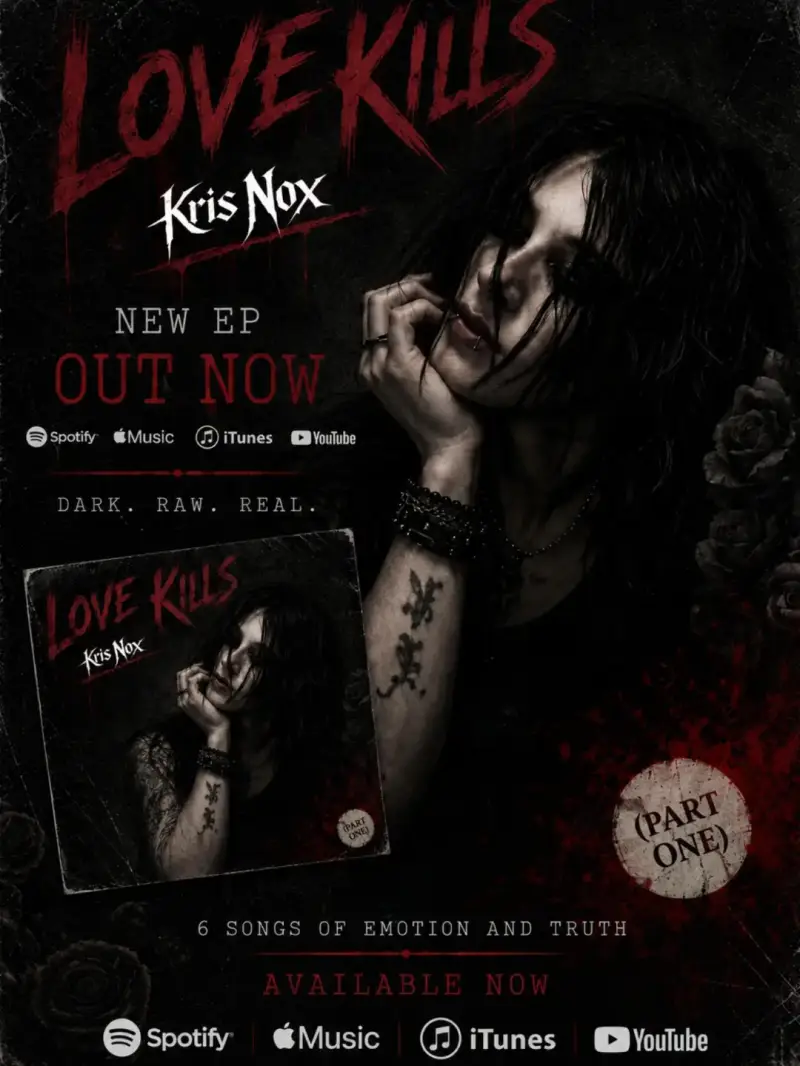
KRIS KNOX – Love Kills Part One – Review- When Darkness Finds a Voice
Atmospheric, personal, dark, and yet journalistic. The focus isn’t just on the music, but also on the question of what lies behind the KRIS KNOX project.
Sometimes albums aren’t born from a concept, but from a need. From thoughts that can find no other way out. From fears, memories, obsessions, and all the things we like to bury deep inside ourselves. *Love Kills Part One* by KRIS KNOX, the solo project of Christian Miconi, feels exactly like such a moment.
Those who know Miconi primarily through VLAD IN TEARS will certainly discover familiar shadows here—but also a new openness. Because KRIS KNOX is more than just a musical detour. It’s a look inward.
Between Darkness and Hope
The very concept of the project contains a contradiction: horror and hope, isolation and survival, obsession and the desire to move forward. It is precisely these contrasts that make *Love Kills Part One* so compelling.
Miconi describes the creative process as deeply introspective. It revolved around thoughts, fears, and unanswered questions. Music became an outlet—but not one that simply relieves pressure. Rather, the dark thoughts are transformed into sound, take on shape, and ultimately find their own voice.
The key point here is that the darkness does not remain one-dimensional.
*Love Kills Part One* doesn’t simply wallow in darkness. Beneath the surface lies the question of the person who carries this darkness. What do we do with our fears? Where do we put memories we can’t shake off? And how much of what we repress actually belongs to us?
No Answers to Every Question
One of the great strengths of this project is that Miconi doesn’t try to explain everything. And that’s a good thing.
Especially in the dark and gothic genres, artists often rely on unambiguous imagery. KRIS KNOX, on the other hand, deliberately leaves room for interpretation. Lyrics and themes are allowed to remain ambiguous. The listener is free to bring their own experiences to the music and discover their own personal story between the lines.
This fits perfectly with the atmosphere of *Love Kills Part One*.
Because good dark music doesn’t work like a puzzle that has to be completely solved by the end. It works more like an old room you walk into, where you can’t immediately make sense of the shadows.
Maybe that’s exactly the point.
Less mask, more human
The release becomes particularly compelling when Miconi talks about himself.
He describes a journey away from expectations and the pressure to conform to certain ideals. KRIS KNOX allows him to embrace contradictions and imperfections. As a result, the music feels less like a role and more like a personal statement.
Three years ago, he says in the interview, he probably wouldn’t have been able to share much of this with such openness.
Today, the fear of being misunderstood seems to have diminished.
And that is precisely where the special maturity of this release lies.
Not in having everything under control—but in letting go of control for once.
An Album Like a Shared Nightmare
At some point, according to Miconi, the individual songs began to speak to one another. The individual tracks coalesced into a cohesive world—almost like chapters of a shared nightmare.
That is perhaps the most important description of *Love Kills Part One*.
Because this release doesn’t simply aim to juxtapose individual songs. It creates an emotional space in which the tracks complement one another. You don’t just hear music—you step into a mood.
And this is precisely where it becomes clear that KRIS KNOX isn’t simply an extension of VLAD IN TEARS.
It’s a cosmos of its own.
A more personal, more vulnerable—and perhaps, for that very reason, more intense—one.
The Art of Not Playing It Safe
It’s also interesting to note Miconi’s statement that the most difficult creative decision was to trust in simplicity and emotion rather than overthinking everything.
That sounds simple at first.
But it isn’t.
Experienced musicians, in particular, know how quickly one can get lost in arrangements, expectations, technical possibilities, and the quest for the perfect result. KRIS KNOX counters this with something else: instinct.
Authenticity over calculation
And it’s precisely this attitude that makes *Love Kills Part One* believable.
It doesn’t sound like an attempt to please a specific target audience. It sounds like an artist who allows himself to open a door behind which things might not always look pleasant.
When Love Destroys
The title *Love Kills* already carries a powerful emotional tension.
Love is usually associated with closeness, security, and hope. But love can also hurt, create dependency, become obsessive, and ultimately destroy.
KRIS KNOX is clearly interested in precisely this darker side of human emotions.
And so the title becomes not merely a gothic cliché, but a symbol of what drives this project in the first place: the ambivalence of human emotions.
Love can save.
Love can destroy.
And sometimes both are true at the same time.
Between the Lines
What remains after *Love Kills Part One*?
Perhaps exactly what Miconi hopes his listeners will take away: not a specific answer, but a personal feeling.
The realization that vulnerability doesn’t have to be a weakness. That fear is human. That darkness doesn’t automatically mean the end. And that sometimes, the very things we’d most like to run away from can give rise to something creative and powerful.
KRIS KNOX is therefore less an escape from the darkness than an acceptance of it.
Christian Miconi doesn’t just bring his shadows into the studio.
He gives them a microphone.
And perhaps that is precisely the true strength of *Love Kills Part One*.
TuneSeat Review
*Love Kills Part One* isn’t the kind of release you can just consume on the fly and then forget about. It demands your attention—but it also rewards it.
It’s a personal, dark, and atmospheric statement from a musician who is increasingly breaking free from expectations and instead following his own artistic truth.
If you look beneath the surface, you won’t find an artist who wants to play exclusively with horror and darkness.
You’ll find a person grappling with his own shadows.
And perhaps that is the most beautiful irony of this album:
Out of the darkness emerges something that can bring us closer to ourselves.
KRIS KNOX – Love Kills Part One
An album for everyone who doesn't run away from their shadows, but listens to them instead.
written by C.T